Posts tagged with Microservices

A Brief History of Scaling Uber
On a cold evening in Paris in 2008, Travis Kalanick and Garrett Camp couldn't get a cab. Fast forward to today where Uber is the largest mobility platform in the world, in over 70 countries, 10,500 cities, and 130 million users. Here's the story of the key moments in scaling Uber engineering ...

The Power of Pre-Mortems in Software Development
The software post-mortem is well known. It’s a standard best practice that really marks the end of any software project. It also fits in well with the Agile manifesto, specifically the retrospective - always be reflecting, always be improving. Post-mortems are usually only conducted when thin...
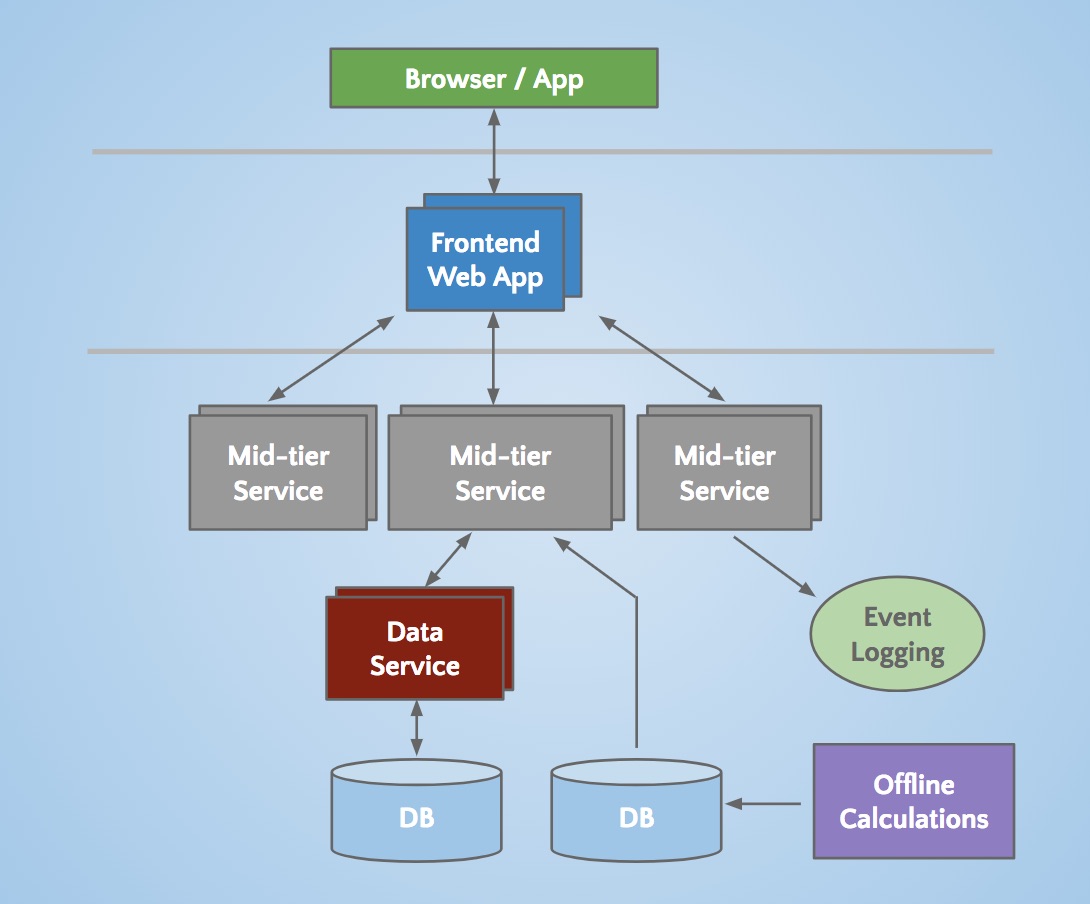
So, You Want to Move to Microservices?
As I reflected back on my time at LinkedIn, I put together a brief history of its scaling story. We had done the (now) classic migration from monolith to microservices. Just like oh I dunno, Amazon, Google, eBay, Twitter, Netflix, and my current employer Uber (to name a few). And why not? Mic...

A Brief History of Scaling LinkedIn
LinkedIn's scaling journey began with a single application and evolved into a microservices architecture, enhancing scalability and reliability. This transition involved the introduction of technologies like Kafka for data streaming and Rest.li for API interactions, showcasing the need for ev...
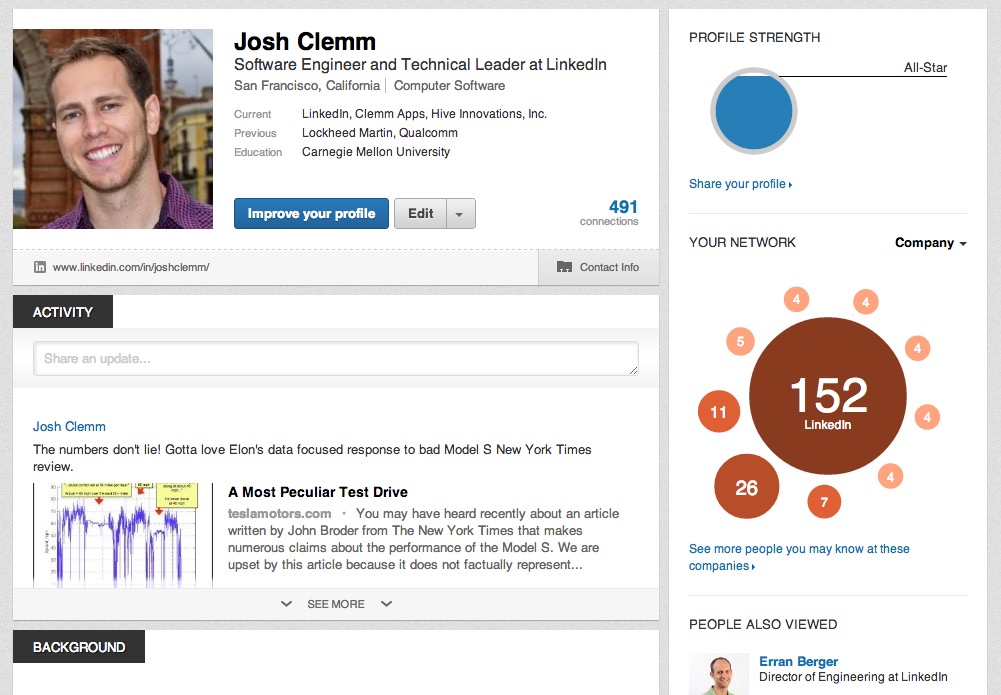
Engineering the New LinkedIn Profile
This post I originally wrote on the LinkedIn Engineering Blog that documents my team’s journey rewriting LinkedIn’s main member profile page. It’s a combination of a brand new design, numerous new product features, and a brand new frontend architecture. This architecture uses a custom Java we...