Building Super Truck Rally with AI
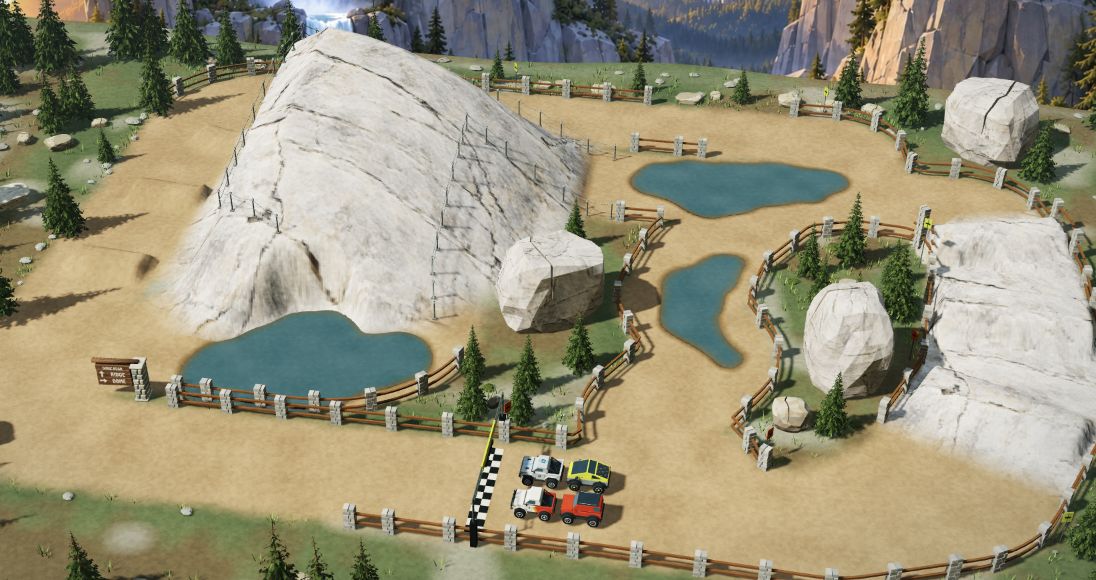
Dome Rush. Inspired by Cutoff Pass but set in Yosemite, required ongoing iteration and playtesting
I’ve been seeing all these amazing “one-shot” AI games on Twitter lately. Models like GPT 6 Astra and Opus 5.5 are trained to excel at 3D modeling, so their ability to use tools like Blender and make 3D games is impressive, even with just one prompt!
The post usually says something like “Look at this crazy one-shot game I built,” with a very cool video of the game. It implies that all game development is so easy that anyone can do it and that the art and craft of individual developers and designers are no longer needed.
Well, I decided to give it a try.
One of my favorite arcade games growing up was Off-Road. I absolutely loved the overhead view of the races and those free-spinning steering wheels. It had something special about it that the other third-person racing games lacked.
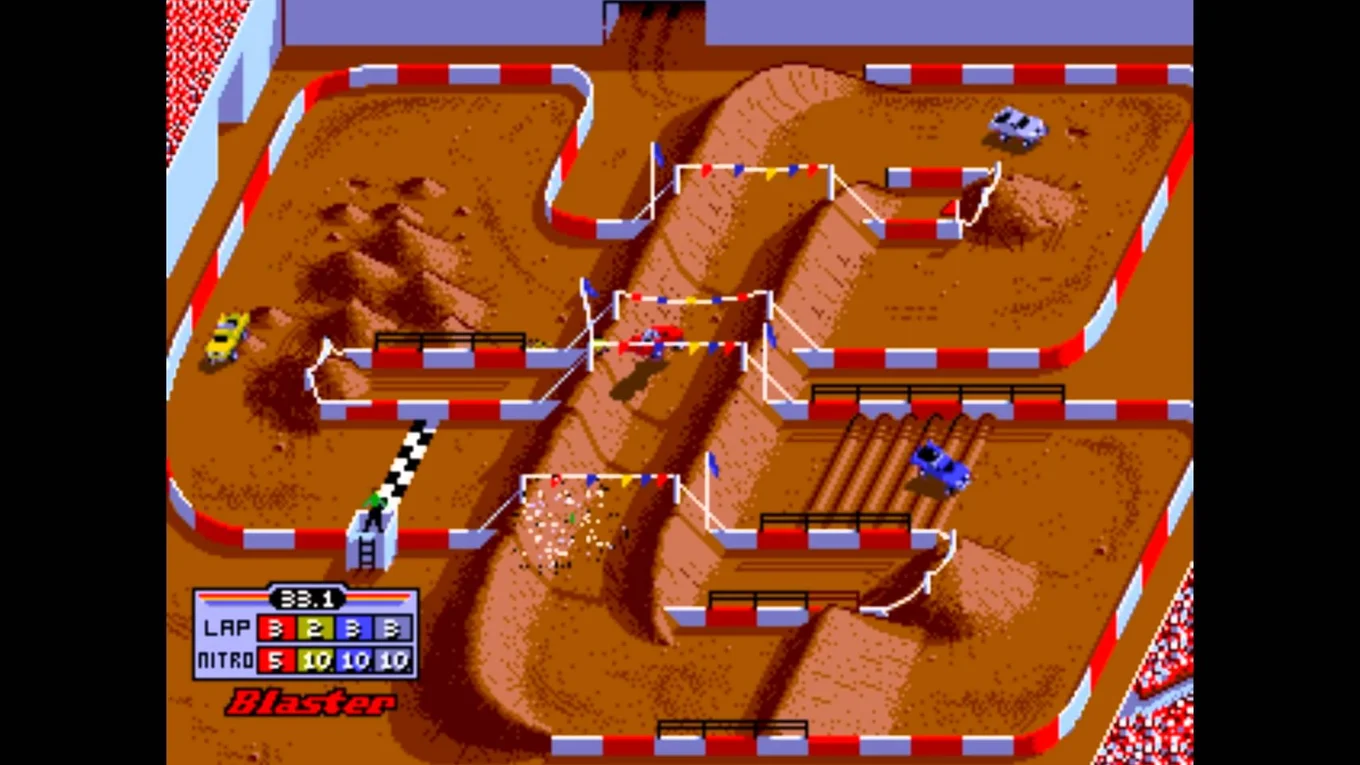
The Blaster course for the original Super Off Road. Screenshot: Vintage Arcade Superstore.
So I decided to build a game inspired by it (and Super Sprint). I wanted those trucks, sliding corners, jumps, collisions, mounds, water, and nitro boosts. I also do a lot of arcade modding, so getting this game working with real arcade wheel controls was a big part of my vision from the start.
I started with a very detailed spec for a miniature RC-style race and my preferred tech stack: Rust, WASM, and Rapier for rigid-body support. And the output was pretty awesome, very fun, and very playable. I definitely had something here. But the game was nowhere near the level of craft, delight, and depth I wanted before sharing it with others.
What resulted was iteration after iteration after iteration. A “one-shot” game turned into hundreds of “shots.”
The following is a short recap of that journey…
Getting the trucks to feel right
You can easily write “responsive steering and convincing jumps” in a spec. Then you drive around a corner and realize you have a lot of work to do.
I kept changing the physics, driving the same course, and discovering that an improvement on one stretch made another worse. I even watched a bunch of gameplay videos of the Off-Road arcade game itself to better capture the “feel.” At one point, I revised how vehicle forces followed the road to preserve the arcade handling while improving suspension on ramps.
An awkward landing could involve the ramp, suspension, collision geometry, or approach speed. And it was very possible to jump completely out of the course (it’s better now, but still possible).
Playtesting also exposed a lot of questions about checkpoints, shortcuts, and resets. Where should a flipped truck reappear? Does a shortcut count fairly toward the lap? (I kinda did want some non-obvious shortcuts so players could “cheese” it.)
The engine and those small decisions determine whether the game feels janky or consistent enough to learn and enjoy. AI can’t do that.
Obsessing over the details
My son enjoys building too, and we worked on the game together. A lot of the truck, course, and level design came from our collective imagination.
We cared about every truck’s proportions, paint, and appearance in the garage, on the track, and on the podium, doing multiple iterations. We wanted to bring in more types of trucks like a Jeep, an SUV, a Humvee, and even a monster truck. The truck for the main racing rival, Quicksilver, went from three concepts to a Blender model and then a game asset. Even then, wheel pivots, lighting, and readability at racing scale needed attention. It was a grind.
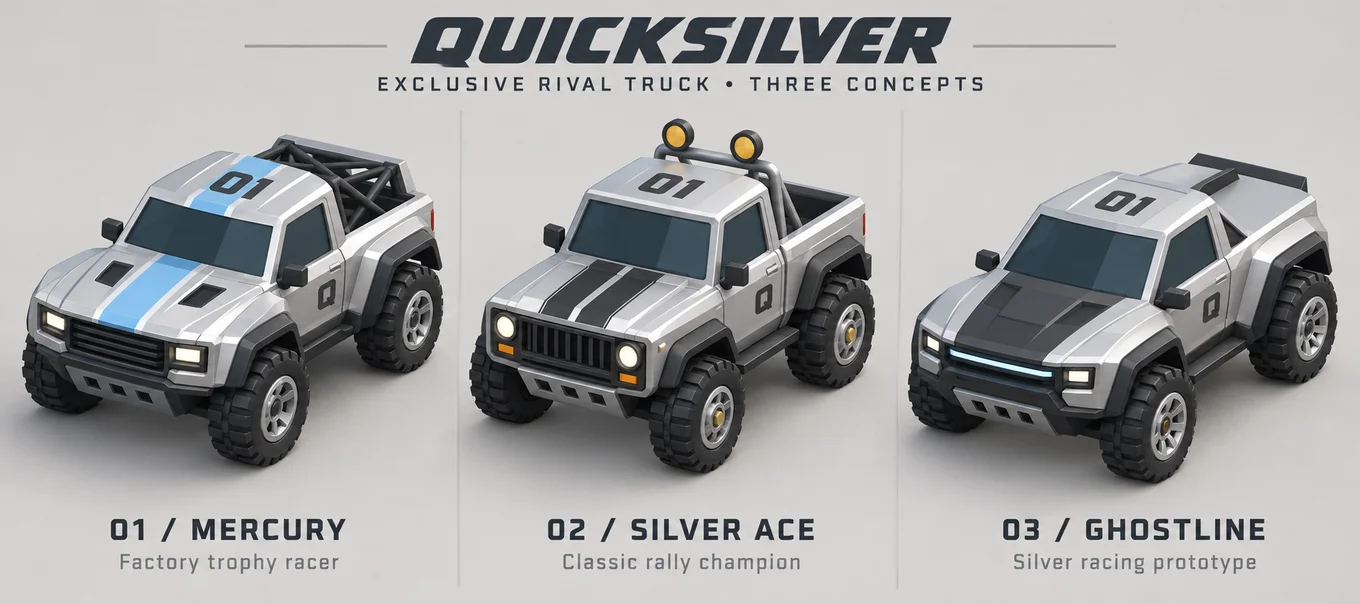
Three concepts for Quicksilver's truck. Mercury, on the left, became the game asset.
Many of the off-road tracks were inspired by the originals as well as some of the Super Sprint ones.
But the national park courses are mostly original designs. We love Yosemite and the redwoods of Northern California and wanted to bring those landscapes into the game (along with the rolling hills of Wine Country).
Every level went through pass after pass. Nudging a tree. Obsessing over a texture. Shifting a track dimension by a few pixels in the view. Smoothing roads, widening turns, improving backdrops. We experimented with bringing in image backdrops and textures alongside the 3D models to make it look even better.
For background music, I generated dozens and dozens and dozens of candidates using Suno.ai before choosing the small set in the game. I wanted something about each level to surface in its soundtrack. A bit of surf rock, some rockabilly, some country, or some cowpunk. A song could sound great by itself and still feel wrong for that course. The listening, rejecting, and trying again were a substantial part of the work.
I also tried hard to generate sound effects with AI (since code-generated sounds are pretty awful). Even after lots of attempts with ElevenLabs and Suno, I just couldn’t get the clear, short sounds I wanted (about 0.5 to 1 second). I ended up buying an existing sound effects pack and using some of those sounds in the game (and keeping some of those original, though non-ideal, sounds).
Making people want another race
Games also need UI design, so this project stretched my product design skills. Choosing a course, picking a truck, starting a race, and finding the next one all needed to feel easy. I tried different menu layouts, grouped courses into circuits, and tightened the race header to leave more room for the track.
I’m not a designer, so my workflow was more about prompting variations and iterating. I started by having AI code options, then moved toward having it generate an image for each option, and finally a single image showing multiple options. That was a lot faster, maintained my game’s design system better, and kept token usage efficient. I do a lot of this in Figma these days.
I also wanted moments of delight: the finish effect, your truck on the podium, the in-game billboards, entering arcade-style initials after a great time. That sequence mattered as much as the individual features. I also added mobile controls at one point, but to be honest, it’s not great on mobile and likely won’t be. The tight controls just don’t work, and this game is all about that overhead view to see the whole track.
Arcade controls
Making a fun computer game is fine, but the original vision was to build something inspired by Off-Road and that game’s free-spinning wheels, which make it so unique.
I have a FightBox retro controller with a spinner, so I spent some time wiring up the game to this device, handling button mapping, and most importantly, tuning the spinner sensitivity. And there’s definitely no way to do this without actual hardware. I had to feel what was wrong and adjust it.
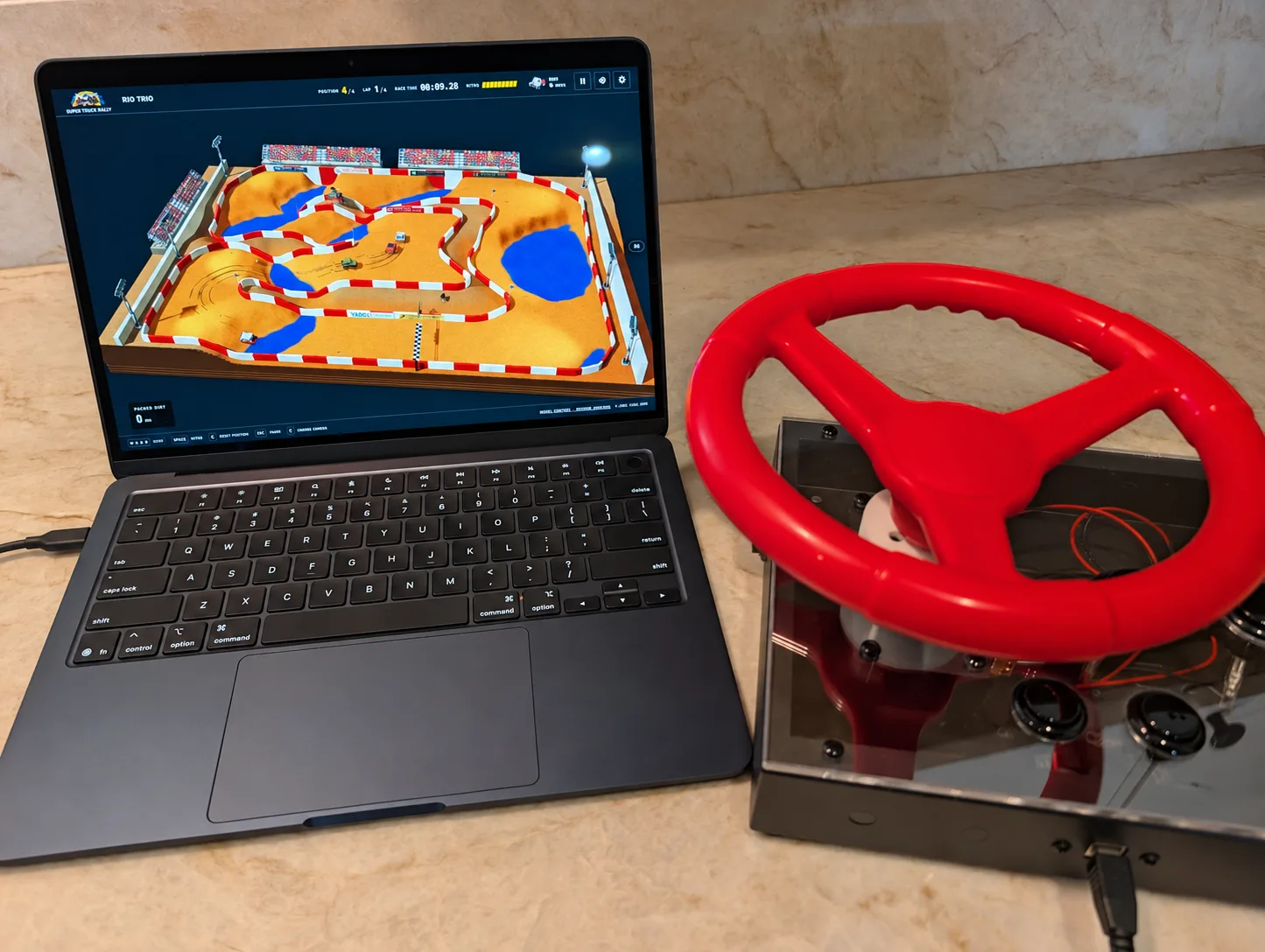
Testing Super Truck Rally with real arcade controls.
Eventually, I want to install the game and controls in one of my existing arcade cabinets (with some woodworking and 3D printing likely to come). My favorite projects are combinations of software and hardware. Stay tuned!
Engineering fundamentals are still needed!
Vibe coding often does not produce super well-architected, modular code. I had to keep an eye on some of the code that AI was producing for the game. And it was pretty clear it was trying to merge the game engine, level design, and different assets. And when everything’s merged like that, it takes AI so much longer to find the right context for subsequent edits. So I had to really lean into my engineering experience to ensure the architecture and rendering were optimal.
To scale up level creation, I ended up building a level editor and extracting a lot of details for each level, like road width, border radii, and elevation, which AI really struggled to keep consistent.
And once this game had leaderboards, I had to think through data storage, server approach, and then reliability, scale, and security.
These are the parts of any game or app that users definitely don’t see but are as important as anything else for keeping things running smoothly.
AI is amazing, but that human touch is still required
This project really stretched my skills. I had to go deep on art, music, sound, product design, engineering, and game design. AI definitely did “the work” but was nothing without deep understanding, significant steering, and all those iterations. Care, craft, and delight are something you feel.
So, to summarize: yes, it’s super impressive what AI can do with one single shot. It shows you what’s possible and gets you that much closer to your vision. But let’s not pretend a good game or app will be completely generated by AI. It still needs deep expertise and obsession to make something useful.
Besides, if everyone could make something amazing with little work, then what they create would no longer be special. Creating something special, unique, and differentiated likely won’t come from AI itself. Humans are still the frontier for creative domains.
Development timeline
Explore the full development timeline in the original article for the iterations behind the game.
You May Also Enjoy
Is Ralph Wiggum the Future of Coding?Autonomous AI coding doesn't fail because models aren't smart enough. It fails because we give them too much context, vague g... |
The Next AI Breakthrough Is Old-Fashioned Software EngineeringThe next AI breakthrough won't be smarter models but reliable ones. Like self-driving cars, progress of AI agents means consi... |